
Introduction
As a writer, few things are more frustrating than staring at a blank page, unable to find the right words. Writer’s block can strike anyone, from novice bloggers to seasoned authors, and it can be a significant obstacle to productivity and creativity. However, with the right strategies and mindset, you can overcome this common challenge and keep your writing flowing smoothly. In this comprehensive guide, we’ll explore effective techniques to conquer writer’s block, reignite your inspiration, and maintain a consistent creative output.

1. Understand the Root Causes of Writer’s Block
Before diving into solutions, it’s essential to understand what might be causing your writer’s block. Identifying the root cause of the block allows you to choose the most effective strategies for overcoming it.
Common reasons include:
- Fear of failure or criticism: Worrying about how your work will be received can paralyze your creativity. This fear often stems from perfectionism or insecurity.
- Perfectionism: Wanting everything to be flawless from the start can create unnecessary pressure, making it harder to write freely.
- Lack of inspiration or motivation: Sometimes, the ideas just aren’t flowing, which can make sitting down to write feel like a chore.
- Burnout or exhaustion: Overworking yourself can lead to mental and physical fatigue, leaving you feeling uninspired and unable to write.
- Overwhelming pressure or deadlines: The stress of having too many deadlines or expectations can stop you from starting at all.
- Distractions or lack of focus: Being constantly interrupted or not having a clear focus can prevent you from making meaningful progress in your writing.
Actionable Tip: Reflect on your current writing situation and try to pinpoint the underlying cause of your block. Once you identify the source, you can choose the most effective strategies to overcome your creative barriers.
Want easy, practical content tips to grow your business? Join my weekly email list for Canva tricks, new social media updates, and simple strategies that actually work.
2. Establish a Consistent Writing Routine
One of the most powerful ways to combat writer’s block is to develop a regular writing habit. A regular writing habit helps by conditioning your brain to write more easily, even without inspiration. Set aside dedicated time each day for writing, even if it’s just for 15-30 minutes. Consistency helps train your brain to be creative on demand and reduces the pressure of waiting for inspiration to strike and the perfect moment to start.
Tips for establishing a writing routine:
- Choose a specific time of day when you’re most alert and creative: Whether it’s early morning or late at night, writing at a time that suits your natural rhythms can make a significant difference.
- Create a dedicated writing space free from distractions: Having a specific place where you write allows your mind to associate that space with creativity, making it easier to get into the writing zone.
- Start with small, manageable writing goals and gradually increase them: Begin with short writing sessions to build momentum. Gradually increase the time as you get more comfortable.
- Use time-blocking techniques to protect your writing time: Set specific time blocks for writing and treat them as appointments that can’t be skipped.
Actionable Tip: Start with 15-minute daily writing blocks, then gradually increase them as you get into the routine. The key is consistency, not the length of each session.
3. Embrace Free Writing and Brain Dumping
When you’re feeling stuck, try free writing or brain dumping. Set a timer for 10-15 minutes and write continuously without stopping to edit or censor yourself. This technique helps bypass your inner critic and can uncover new ideas or perspectives you might not have considered otherwise.
The goal is not to write perfectly, but to get words on the page and bypass the inner critic that holds you back.
During free writing sessions:
- Write about anything that comes to mind, even if it seems unrelated to your project: Allow your thoughts to flow freely. This can sometimes lead to unexpected ideas or new angles on your writing.
- Don’t worry about grammar, spelling, or punctuation: Free writing is about unblocking your thoughts, not perfecting them.
- Keep your hand moving or fingers typing, even if you’re just repeating words: The act of writing continuously helps you push past mental barriers and get into a creative flow.
Actionable Tip: Set a timer for 10-15 minutes and write non-stop during that time. Don’t worry about quality; just let the words flow.
4. Break Down Your Writing Project into Smaller Tasks
A large writing project can be overwhelming, leading to procrastination and writer’s block. Break your project into smaller, more manageable tasks. This approach makes the writing process less daunting and provides a sense of accomplishment as you complete each task.
Ways to break down your writing:
- Create an outline with main points and subpoints: Structuring your project into smaller chunks helps provide clarity and direction.
- Set word count goals for each writing session: Breaking your writing into smaller, more achievable goals will help you track your progress and stay motivated.
- Focus on completing one section or chapter at a time: It’s easy to get lost in the big picture. Focus on completing one section before moving on to the next.
- Use the Pomodoro Technique (25-minute focused work sessions followed by short breaks): This helps maintain focus and prevent burnout during long writing sessions.
Actionable Tip: Start by outlining your project. Divide it into clear sections and set word count targets for each one. This will make your project seem much less daunting.
5. Change Your Environment
Sometimes, a change of scenery can spark new ideas and break through creative blocks. If you’re feeling stuck in your usual writing spot, try moving to a different location. This could be as simple as switching rooms in your home or venturing out to a local café or park.
Changing your environment can stimulate creativity and help you see your project from a new perspective. It often helps clear your mind and break through blocks. Many authors love trying different cafes to keep this spark flowing
Ideas for changing your writing environment:
- Work in a different room or area of your home: A new setting, even within your own home, can help shift your mental state.
- Write outdoors in nature: Sometimes, fresh air and natural surroundings can provide the perfect backdrop for inspiration.
- Visit a library or coworking space: If you’re used to working in isolation, changing to a communal or quiet public space may help.
- Try writing standing up or using a different device (e.g., tablet instead of computer): Experimenting with your writing posture or equipment can give you a fresh perspective.
Actionable Tip: If you’re feeling stuck, move to a new location and write for 30 minutes in that space. You may be surprised at how a change in setting can stimulate new ideas.
6. Use Writing Prompts and Exercises
Writing prompts and exercises can jumpstart your creativity when you’re feeling uninspired. They provide a starting point and can help you explore new ideas or writing styles. Keep a collection of prompts handy for when you need a creative boost to explore new themes, characters, or writing styles outside your usual routine.
Types of writing prompts to try:
- Image-based prompts: Use an image to spark ideas. Focus on describing what you see or creating a story around the image.
- Single-word prompts: Choose one word and write a piece of fiction or non-fiction based on it.
- “What if” scenarios: Consider hypothetical situations to create new conflicts or characters.
- Character or dialogue prompts: Focus on building a character or writing a dialogue between two or more people.
- First-line prompts: Start with a compelling first line and build a story from there.
Actionable Tip: Keep a notebook of different prompts you can turn to when you’re feeling stuck. Use them to get your creativity flowing and help you move past writer’s block.
7. Read Widely and Regularly
Reading is essential for writers. It exposes you to different writing styles, ideas, and perspectives, which can inspire your own work. Reading helps expand your vocabulary, improve your writing skills, and inspire new ideas. Make time for regular reading, both within and outside of your usual genre or niche.
Benefits of reading for writers:
- Expands vocabulary and improves language skills: Exposure to varied sentence structures and vocabulary helps enhance your own writing.
- Provides inspiration and new ideas: Seeing how other authors approach different themes can inspire your own creativity.
- Helps you understand different narrative structures and techniques: Understanding how stories are built and paced can improve your storytelling skills.
- Keeps you informed about current trends in your field: Reading widely, both inside and outside your genre, helps you stay relevant and up-to-date.
Actionable Tip: Dedicate time each day to reading, even if it’s just for 20 minutes. Make sure to read books from different genres or authors outside your usual niche.
8. Practice Mindfulness and Meditation
Mindfulness and meditation techniques can help clear your mind, reduce stress, and improve focus – all of which are beneficial for overcoming writer’s block. Even a few minutes of mindfulness practice before writing can make a significant difference in helping you relax and focus.
Simple mindfulness exercises for writers:
- Deep breathing exercises: Breathe deeply to center yourself and reduce stress before writing.
- Body scan meditation: Focus on each part of your body to release tension and bring yourself into the present moment.
- Mindful observation of your surroundings: Take in your environment and notice details you might not normally pay attention to.
- Guided visualization: Close your eyes and imagine yourself writing effortlessly, surrounded by inspiration and creativity.
Actionable Tip: Start each writing session with a 5-minute mindfulness exercise to clear your head before diving into your work.
9. Engage in Physical Activity
Physical exercise can boost creativity and cognitive function. When you’re feeling stuck, take a break for some physical activity. This could be a brisk walk, a quick workout, or even some gentle stretching.
Exercise can boost creativity by increasing blood flow to the brain and releasing endorphins that reduce stress. This activity provides a mental break, giving your subconscious time to process and work through creative problems.
Benefits of exercise for writers:
- Increases blood flow to the brain, improving cognitive function: A brisk walk or workout can help you think more clearly.
- Releases endorphins, reducing stress and improving mood: Physical activity helps lower anxiety, which can be a major barrier to creativity.
- Provides a mental break, allowing your subconscious to work on writing problems: Sometimes, stepping away from your work allows your brain to come up with new ideas while you’re focused on something else.
Actionable Tip: Take a 20-minute walk before writing or do some light stretching to get the blood flowing and clear your mind.
Struggling to keep your author platform active while juggling writing deadlines?
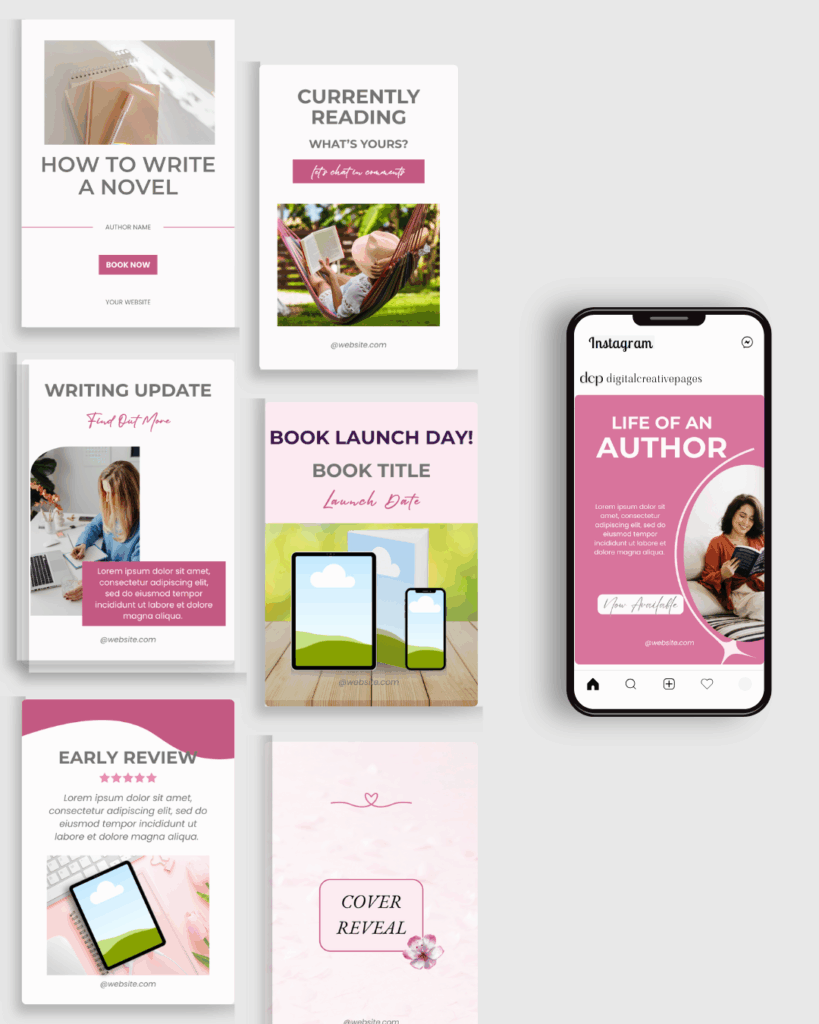
My Author Book Engagement Template Pack includes 112 ready-to-use Canva designs for Instagram and Pinterest. Perfect for cover reveals, book launches, reader engagement, and everything in between. No more staring at blank Canva pages wondering what to post! These templates work for any genre and require no Canva Pro account. Simply download, customize with your book details and brand colors, and post.
For less than the cost of 2 lattes, get your template pack here, and never run out of engaging content ideas again


10. Collaborate with Other Writers
Sometimes, bouncing ideas off others can help overcome creative blocks. Join a writing group, find a writing buddy, or participate in online writing communities. Sharing your challenges and getting valuable feedback can provide new insights and motivation.
Collaborating with other writers can provide new ideas and a sense of accountability. Sharing your challenges with fellow writers can offer support and motivation when you’re stuck.
Ways to collaborate with other writers:
- Join local or online writing groups: These communities can offer feedback, advice, and encouragement when you need it.
- Participate in writing workshops or classes: Workshops provide structured support and a chance to learn new skills.
- Find a writing accountability partner: Someone to check in with regularly can motivate you to stick to your writing goals.
- Engage in collaborative writing projects: Working on projects with others can provide fresh insights and new perspectives.
Actionable Tip: Look for a local writing group or start a virtual writing accountability partnership to gain new perspectives and stay motivated.
11. Try Different Writing Techniques
Experimenting with various writing techniques can help you approach your work from new angles and overcome blocks. These techniques allow you to break free from your usual writing routine and see your ideas in different ways. They can also stimulate creativity and uncover hidden thoughts.
Here are some techniques to try:
- Freewriting: Write continuously for a set time without stopping to edit. This technique helps you get your thoughts on paper without worrying about perfection, leading to more spontaneous ideas.
- Clustering: Create a visual map of ideas branching from a central concept. This helps you organize your thoughts visually, allowing you to explore connections and ideas that may not be immediately obvious.
- Reverse Outlining: Start with your conclusion and work backward. By focusing on the end goal first, this technique helps you clarify the structure of your writing and determine the key points to develop.
- Writing Sprints: Set a timer and challenge yourself to write as much as possible in a short burst. This technique helps reduce perfectionism and boosts your productivity, as the pressure of time forces you to just write.
Actionable Tip: Pick one technique to try each week and see which one helps you break through writer’s block the most.
12. Address Perfectionism and Self-Doubt
Perfectionism and self-doubt are common culprits behind writer’s block. The belief that your writing must be flawless can paralyze creativity. Remember that first drafts don’t need to be perfect – they just need to exist. Give yourself permission to write imperfectly and focus on getting your ideas down.
To overcome this, focus on progress rather than perfection and remember that first drafts are meant to be rough.
Strategies to combat perfectionism:
- Set Realistic Expectations for Your First Draft: Understand that your first draft doesn’t need to be perfect. The goal is to get your ideas on paper, and editing comes later.
- Use the “Shitty First Draft” Technique: Anne Lamott advocates writing a bad first draft without worrying about quality. This approach takes off the pressure and helps you simply start writing.
- Separate the Writing and Editing Processes: Writing and editing are two distinct tasks. Focus on creating during the writing process and reserve editing for later, to avoid getting stuck in perfectionism.
- Practice Self-Compassion and Positive Self-Talk: Combat self-doubt by being kind to yourself and reframing negative thoughts. Remind yourself that writing is a process, and growth comes with each draft.
Actionable Tip: Start your next writing session by telling yourself it’s okay to write a “bad” first draft. Focus solely on getting your ideas down without judgment. (actionable tip)
13. Take Strategic Breaks
Sometimes, the best way to overcome writer’s block is to step away from your work temporarily. Taking breaks can help refresh your mind and provide new perspectives. However, be mindful not to let breaks turn into prolonged procrastination.
Effective break strategies:
- Take Short, Timed Breaks Using the Pomodoro Technique: Work for 25 minutes, then take a 5-minute break. This helps maintain focus and reduces burnout, keeping your productivity high.
- Engage in a Different Creative Activity: Take a break by doing something creative but not related to writing, like drawing or playing music. This allows your brain to relax while staying in a creative mode.
- Practice Mindfulness or Meditation: Take a few minutes to meditate or practice deep breathing. This can help reduce stress, improve focus, and refresh your mind for better writing.
- Do Something Unrelated to Writing: Go for a walk, clean, or engage in a completely different activity. Giving your mind a break from writing can help you return with a fresh outlook.
Actionable Tip: Set a timer for 25 minutes of focused writing and take a 5-minute break afterward. Repeat this cycle to stay fresh and productive.
14. Experiment with Different Writing Tools
Sometimes, a change in your writing tools can provide a fresh perspective and break through creative blocks. Trying different tools can help you find a method that suits your current writing process, which may not only increase productivity but also spark new ideas. (explanation of 3 lines)
Try switching between:
- Handwriting and Typing: Switching from digital to paper can offer a tactile experience that can inspire creativity. Some writers find that handwriting allows for a different kind of flow.
- Different Word Processing Software: Try switching from Microsoft Word to Google Docs, or even explore minimalist apps like FocusWriter. A change in interface may provide a fresh environment for your writing.
- Dictation Software: Tools like Dragon NaturallySpeaking or Google’s voice typing can help when you’re struggling to type. Speaking your ideas out loud often leads to a faster, freer flow of thoughts.
- Specialized Writing Apps (e.g., Scrivener, FocusWriter): Apps designed specifically for writers often have features that help you organize, outline, and focus, which can provide a boost during writer’s block.
Actionable Tip: Experiment with one new writing tool or app each week. Track which one helps you feel more creative and productive. (actionable tip)
15. Set Realistic Goals and Deadlines
Overwhelming goals or unrealistic deadlines can contribute to writer’s block. Set achievable goals and break larger projects into smaller milestones. This approach can help maintain motivation and provide a sense of progress.
Breaking down your writing project into manageable targets makes the process feel less daunting and helps maintain motivation.
Tips for setting effective writing goals:
- Use SMART Criteria (Specific, Measurable, Achievable, Relevant, Time-bound): Ensure your goals are clear, realistic, and achievable within a set timeframe. This helps avoid setting yourself up for failure.
- Set Both Short-Term and Long-Term Goals: Break your project into both smaller, immediate goals and larger, long-term objectives. This gives you a roadmap and provides motivation along the way.
- Celebrate Small Victories Along the Way: Recognize and reward yourself when you hit milestones. Acknowledging your progress keeps you motivated and reinforces positive habits.
- Be Flexible and Adjust Goals as Needed: Life happens, and sometimes goals need to be adjusted. Be kind to yourself and make adjustments when necessary to stay on track.
Actionable Tip: Break down your next writing project into at least three smaller goals and focus on one at a time to avoid feeling overwhelmed.
16. Try Writing in a Different Genre
Sometimes, a change in writing genre can help you think outside the box and spark creativity. If you typically write in one genre, switching to a completely different style can break mental barriers and give you fresh ideas. It doesn’t mean abandoning your main project, but experimenting with different formats can stimulate your creativity.
Examples to try:
- Write a short poem if you usually write prose: Shifting to poetry can help you focus on brevity and language, improving your overall writing style.
- Try writing fiction if you usually write non-fiction: Fiction encourages imagination and storytelling skills that can enhance your non-fiction writing.
- Experiment with dialogue if you’re focused on narrative: Writing dialogue allows you to focus on character development and can add richness to your writing.
- Create a journal entry or a letter to someone: Personal writing like journaling or letter-writing can help you process emotions and develop your voice.
Actionable Tip: Dedicate one day a week to writing in a different genre. It can provide a fun mental shift and open up new creative pathways. (actionable tip)
17. Change Your Writing Perspective
Sometimes, stepping away from the traditional approach can help refresh your creative process. By altering the perspective from which you’re writing, you can break free from mental blocks and gain new insights.
Ways to change your writing perspective:
- Write from a different character’s point of view: Switch to another character’s voice or even an entirely different perspective to provide fresh insights and new angles to your narrative.
- Write in the second person: This perspective can challenge your usual style and force you to engage more directly with your reader.
- Imagine your story as a movie: Visualizing your writing as a movie scene can shift your focus to pacing and visualization, helping you break free from the usual structure.
- Flip the narrative: Try starting from the end of your story or a pivotal moment and work backward to discover new connections or plot developments.
Actionable Tip: Try rewriting a scene or a chapter from a different character’s point of view or even in the second person for a fresh perspective and new energy.
18. Let Go of Control
Sometimes, the need to control every aspect of your writing process can contribute to writer’s block. Give yourself permission to write poorly, make mistakes, or let your ideas flow without trying to perfect them from the start.
How to embrace imperfection:
- Start with freewriting, focusing solely on getting words on the page: Freewriting helps you bypass the internal editor and lets your ideas flow without judgment.
- Allow yourself to write “bad” drafts without worrying about the final outcome: Remember that perfection comes in the editing process, not in the initial draft.
- Recognize that rewriting and editing will improve your work later: Trust the process, knowing that your first draft is just a starting point.
Actionable Tip: Begin your next writing session with the mindset that the goal is to write, not to write perfectly. Allow yourself the freedom to fail forward.
19. Revisit Your “Why”
When you’re feeling blocked, reconnecting with your initial motivation for writing can reignite your passion. Reflecting on why you started your project can give you clarity and help you push through obstacles.
Questions to ask yourself:
- Why did I start this project? Revisit the core reason you began your writing journey to remind yourself of your passion and purpose.
- Who am I writing for? Clarifying your target audience can refocus your efforts and remind you of the value your work brings to others.
- What message do I want to convey? Reconnect with the message or story you’re trying to communicate to ground yourself in your creative mission.
Actionable Tip: Take 10 minutes before each writing session to journal or reflect on why you’re writing. Reaffirm your purpose to re-energize your creativity.
20. Use Visual Inspiration
Incorporating visual aids into your writing process can spark creativity and help you stay motivated. Whether it’s mood boards, photographs, or illustrations, visuals can inspire new ideas, provide clarity on setting or character descriptions, and break up the monotony of text.
Ways to use visual inspiration:
- Create a Mood Board for Your Story: Collect images, color schemes, and textures that represent the tone or setting of your work. A visual representation can help clarify your creative vision and keep you focused.
- Use Pinterest for Idea Generation: Explore Pinterest boards related to your writing genre or themes. Pin images that resonate with your characters, plot, or atmosphere, and revisit them when you need a creative boost.
- Include Visual Descriptions in Your Writing: Take inspiration from visuals to enrich your writing. Describing the details in your surroundings can help readers vividly imagine the world you’ve created, adding depth to your narrative.
- Incorporate Artwork or Illustrations: If you’re working on a longer project, commissioning or creating illustrations related to key scenes or characters can enhance your process and keep you excited about the story.
Actionable Tip: Spend some time on Pinterest or other visual platforms to gather images that resonate with your current project. Refer back to these visuals whenever you feel stuck to inspire fresh ideas.
Conclusion
Writer’s block is a common challenge, but it doesn’t have to derail your writing progress. By implementing these strategies and developing a toolkit of techniques that work for you, you can overcome creative barriers and maintain a consistent writing practice.
Remember, writing is a skill that improves with practice, and even professional writers face occasional blocks. Be patient with yourself, stay persistent, and trust in your ability to overcome obstacles. With time and effort, you’ll develop resilience against writer’s block and rediscover the joy of putting words on the page.
MY TOP POSTS
My introducer post – check out why I chose Showit as my website builder here
Use my code DCP to get one 1.5 months free on Showit
Get all the resources for your social media and digital marketing without breaking the bank from my DCP Shop here
Pin this for later
By signing up for my freebies, you are agreeing that I can use your email address to market to you. You can unsubscribe from marketing emails at any time by using the link in my emails.
Previous post
next post
Search + Enter

meet nila

Hi. I am
Nila
Beta reader, book editor, Pinterest manager, Showit VA
I’m a beta reader and book editor and PA for authors, specializing in story clarity and developmental feedback. I run a sustainable online business that keeps working for me 24/7.
Along with this, I offer Pinterest management for overwhelmed creatives and entrepreneurs and set up and customize Showit templates when the tech side gets too overwhelming.

My Shop
Buy now
i need it

Free Stuff
get the goods
check it out

My Favorites
apps + Tools
Yes, please


